Riding Lesson Etiquette and Stable Manners
Arrive early, be polite to the yard staff, and learn the arena rules: pass left hand to left hand, give way to faster paces, and never walk behind a horse without speaking to it. Say thank you, and always ask before touching or feeding any horse.
Every riding yard runs on a set of conventions that no one writes down but everyone follows. Learn them early and you'll be welcome anywhere; ignore them and you'll quickly be marked as the rider nobody wants in their arena. Most of it is common courtesy applied to a place full of large, easily startled animals.
In the arena
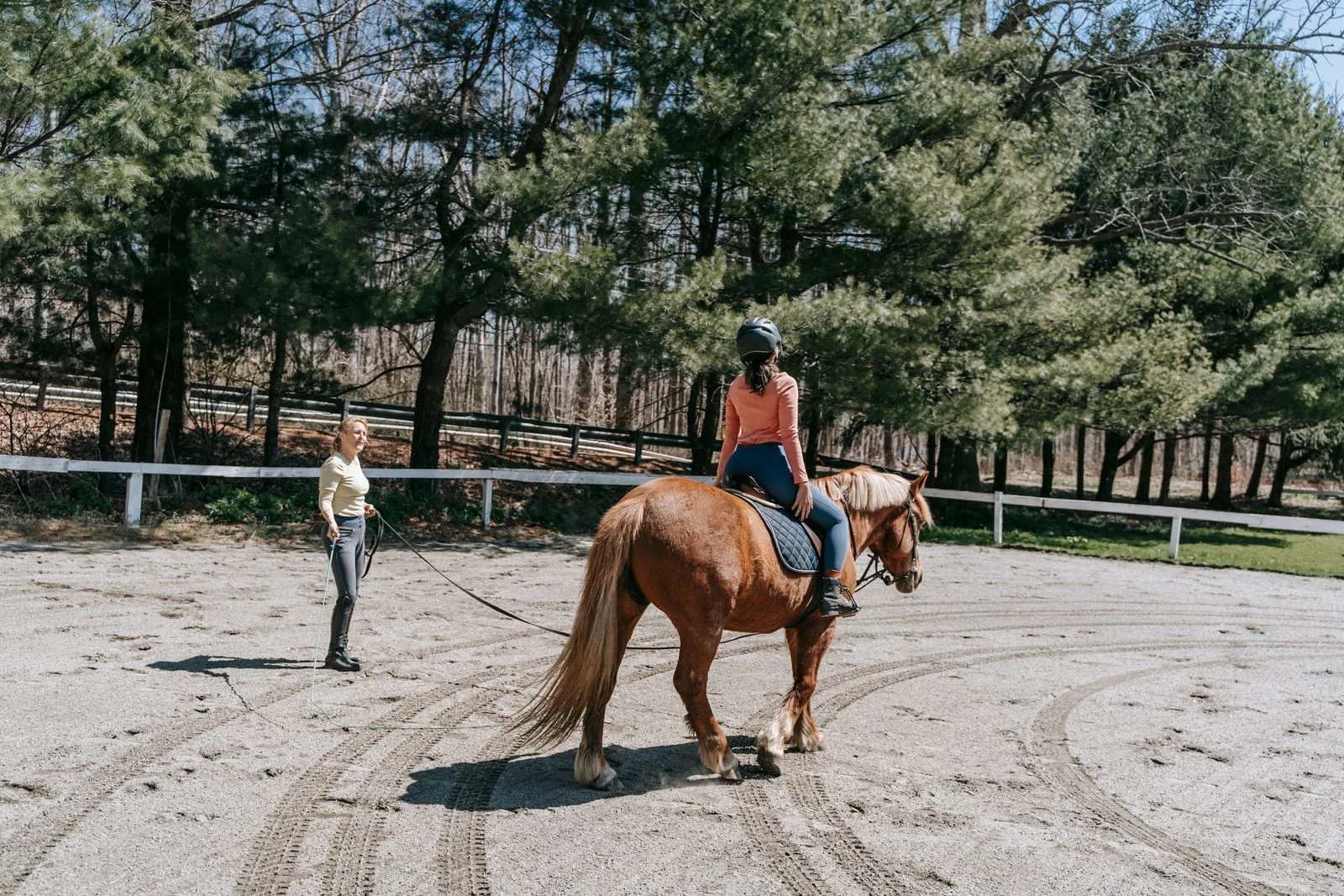
When two riders approach each other on the track, pass left hand to left hand — keep to the right, like driving on the Continent. Riders in a faster pace (say, canter) take the outside track, so those in walk or halt move to the inside to give way. Leave at least a horse's length between you and the horse in front, and never cut across another rider's path.
- Listen to the instructor and don't chat over their teaching.
- Warn others if your horse kicks or is anxious — a red ribbon in the tail signals a kicker.
- Halt on the inside, never on the track where you'll block others.
- Tidy up — put away any equipment you've used and close gates behind you.
Around the yard
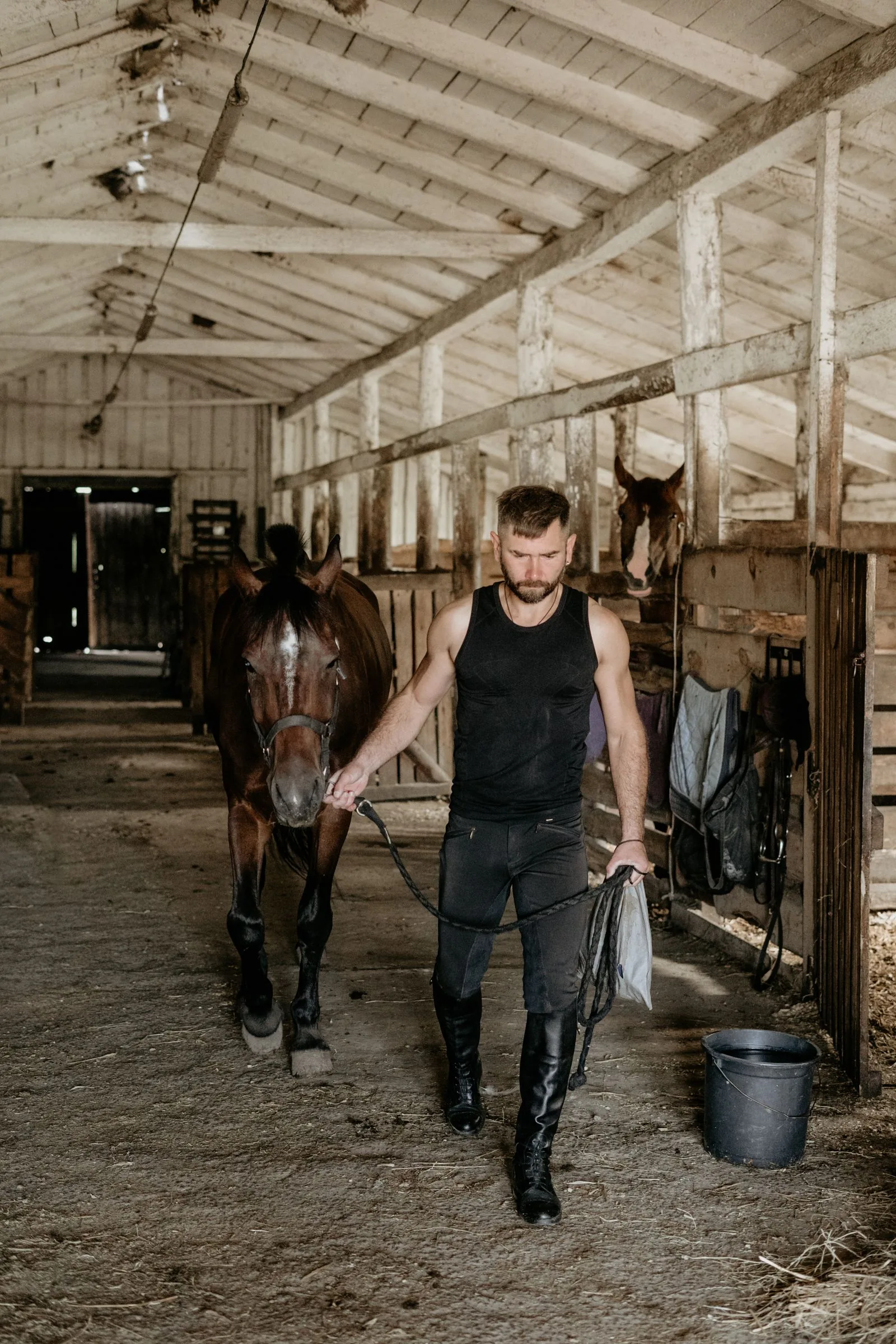
Always speak to a horse before approaching or touching it, and never walk directly behind one — go round, or keep a hand on its hindquarters and talk as you pass. Don't feed any horse titbits without the owner's permission; some are on strict diets or will nip. Be friendly and helpful to the yard staff, who work long, cold hours, and always thank your instructor at the end of a lesson.
Why etiquette matters so much with horses
It's tempting to see yard etiquette as fussy tradition, but almost every convention exists for a solid reason — usually safety, occasionally welfare, and always the smooth running of a busy, potentially dangerous place. Horses are flight animals: a slammed gate, a sudden movement or a raised voice can send half a tonne of startled animal barrelling into someone. The rider who understands why we pass left-to-left, speak before we touch, and never crowd the horse in front is a rider who keeps everyone safe, themselves included. Good manners around horses aren't about being posh or knowing secret codes; they're about being calm, predictable and considerate in an environment where carelessness has real consequences. Master them and you'll be trusted, welcomed and — most importantly — safe.
Before and after your lesson
Good etiquette starts before you even mount. Arrive ten to fifteen minutes early so you're not flustered and the yard isn't kept waiting — turning up late throws out everyone's schedule and means your horse stands tacked and bored. If the school expects you to help, offer to fetch your horse, pick out its feet or lend a hand with tacking up; even if not, a willing, cheerful attitude is always noticed. Afterwards, thank your instructor and your horse, run up your stirrups, loosen the girth, and offer to untack or lead the horse back if that's the yard's way. Reporting anything you noticed — a loose shoe, a rub from the tack, a cough — is genuinely appreciated and marks you as a considerate rider.
The unwritten rules of a livery yard
If you keep your own horse, or share one, a whole extra layer of yard etiquette applies — and getting it right is the difference between a happy yard and a tense one:
- Respect other people's kit and space — never borrow tack, rugs or grooming gear without asking.
- Close and latch every gate behind you, every single time; a loose horse is everyone's nightmare.
- Sweep up after yourself in the barn and wash-bay, and never leave haynets, tools or muck lying about.
- Keep to the muck-heap and parking rules, and don't block gateways or the horsebox turning space.
- Be considerate with noise and dogs — keep dogs on leads and under control around horses.
- Pay your livery on time and communicate promptly with the yard owner about any problems.
Handling horses safely and politely
Much of stable etiquette exists for safety, because horses are large, quick and easily startled. Always approach from the front or side, never directly behind, and speak so the horse knows you're there. Lead from the correct side with the rope folded — never wrapped — around your hand, and never kneel or sit on the ground near a horse's legs. When tying up, use a quick-release knot and, ideally, a breakable loop of baler twine so a panicking horse can free itself rather than injure itself. Ask before entering someone else's stable, and never march a strange horse past another that's eating. These habits quickly become second nature, and they keep both you and the horses out of trouble.
Fitting into the yard community
A riding yard is a community, and the riders who thrive are simply the pleasant, reliable ones. Learn people's names and their horses' names, muck in when help is needed, and don't gossip or take sides in yard politics. Offer to hold a horse for the farrier, share your haynet if someone's run short, and say thank you generously. Newcomers sometimes worry the horsey world is cliquey, but the surest way in is to be helpful, humble and genuinely keen to learn. Treat the staff, the horses and your fellow riders with respect, and you'll find yards to be some of the friendliest places around.
Good manners pair with good basics — see how to start riding and, if you're learning to own, horse care basics and how livery yards work.