What to Wear for Your First Riding Lesson
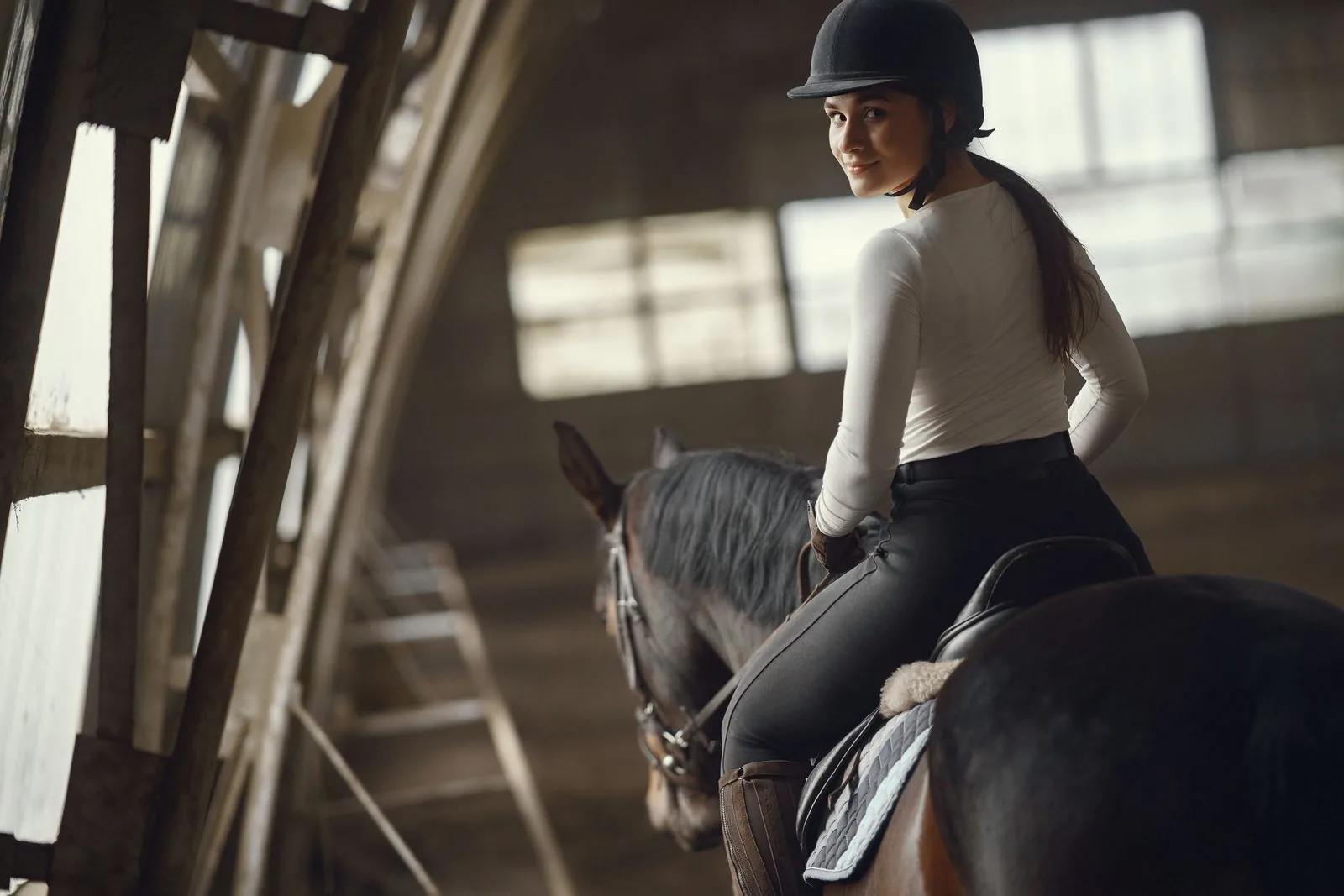
For a first lesson you need long, close-fitting leggings, boots with a small heel (about 2–3cm) and a hard hat — which the school will lend you. Skip jeans, trainers and wellies. Buy nothing until you've decided to carry on.
The most common beginner worry is turning up in the wrong thing. Relax — for a first lesson you need surprisingly little, and any decent school will lend you a hat. The aim is simply to be safe, comfortable and able to move. Save the smart jodhpurs and long boots for once you know you're hooked.
The three things that matter
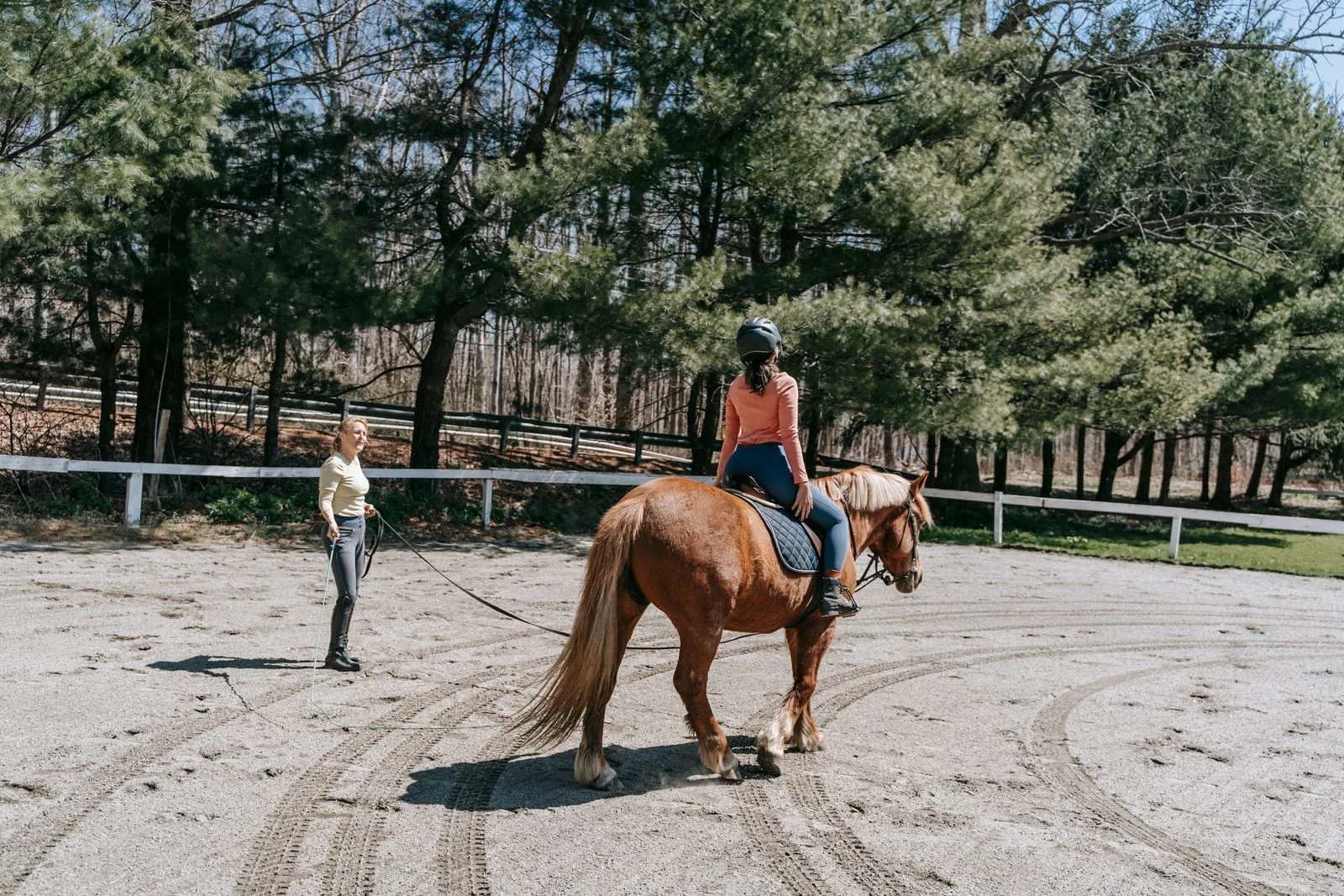
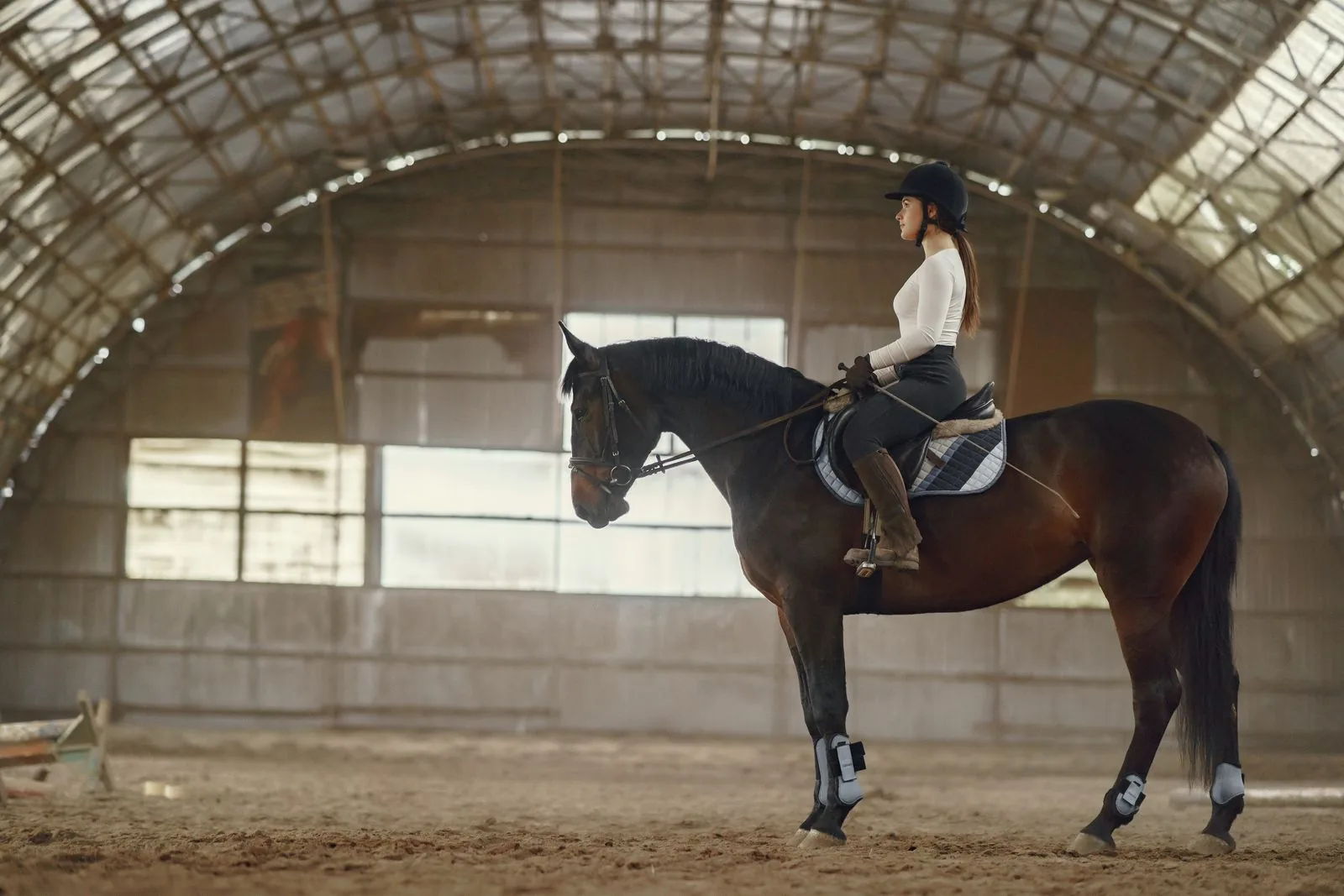
Legs: wear long, close-fitting trousers — leggings, joggers or jodhpurs. Jeans have thick inner seams that rub raw at the knee, so avoid them. Feet: a boot with a small, defined heel (roughly 2–3cm) stops your foot sliding through the stirrup, which is a genuine safety issue. Trainers, wellies and heavy walking boots are all unsuitable. Head: a correctly fitted riding hat is non-negotiable, and the school will provide one for your first lessons.
- A pair of jodhpurs or riding tights — close-fitting and seam-free; the single most useful first purchase once you continue.
- Short jodhpur boots with a small heel — comfortable, walkable and correct — pair with half-chaps later.
- A cheap pair of riding gloves — spare your palms from rein-rub and cold metal buckles.
What to buy — and when
Dressing for the British weather
Riding schools are open, muddy, breezy places, and the arena is often outdoors, so dress as though you're going for a brisk winter walk rather than to the gym. Layers are your friend: a base layer, a fleece or jumper and a light, close-fitting jacket you can unzip once you warm up. Avoid anything long, loose or flappy — a trailing scarf, an open coat or wide trouser legs can catch on the saddle or spook the horse. In summer, a breathable long-sleeved top still beats bare arms for sun and fly protection, and you'll want that hat's ventilation. Whatever the season, assume you will get muddy and leave your good clothes at home.
Why each item matters
It helps to understand the reasoning rather than just the rules, because then you'll make sensible choices with whatever you own:
- The heel stops your foot sliding forward and jamming through the stirrup — the single reason trainers and wellies are banned.
- The smooth-ish sole lets your foot slip free of the stirrup in a fall rather than trapping it.
- Seam-free legs stop the agonising chafe that jeans cause against the saddle flap.
- The hard hat is your one true safety essential, which is why schools insist on a properly fitted one and won't let you ride in a cycle helmet.
- Gloves save your palms from rein-burn and keep your grip when reins are wet.
What you don't need to buy
The equestrian shops are full of tempting kit, but almost none of it is necessary on day one. You do not need long leather riding boots, a body protector (unless you go on to jump or event), a smart show jacket, spurs, a whip or a fancy branded gilet. Buying these before you know you'll continue is the classic beginner's mistake — and long boots in particular are easy to buy in the wrong calf size before you understand your fit. Borrow, improvise and keep your money in your pocket for now.
Borrowing versus buying your first kit
Plenty of new riders feel awkward turning up in "the wrong thing", but instructors genuinely don't mind — they'd far rather you saved your money until you're sure. Ask the school what it lends: nearly all provide hats, and many keep a few pairs of loan boots and half-chaps too. If you know someone who rides, borrowing a pair of jodhpurs for the first month is perfectly sensible. When you do come to buy, second-hand tack and clothing sell briskly on local Facebook groups and at car-boot sales, and a barely-worn pair of jodhpur boots for a few pounds is a far better first buy than a full-price set you might outgrow in skill. The one exception is the hat: if you buy your own, buy it new and have it fitted, because a second-hand hat may have taken a knock you can't see.
Dressing children for their first lesson
The rules are exactly the same for youngsters, with a couple of extras. Leave a little growing room in boots but not so much that the foot slides around, and resist buying expensive kit they'll outgrow in a season. A well-fitted hat is non-negotiable — schools will fit and lend one — and gloves help small hands grip cold reins. Above all, dress them warmly in layers: children get cold quickly standing around the yard, and a chilly, miserable child rarely wants to come back. For more, see our parent's guide to riding for kids.
A quick pre-lesson checklist
Run through this the night before and you'll arrive relaxed and ready:
- Close-fitting leggings, joggers or jodhpurs — never jeans.
- Boots with a small, defined heel; short jodhpur boots are ideal.
- Hair tied back and long jewellery removed.
- Layers you can add or shed as you warm up.
- Gloves if you have them, and a bottle of water.
- Arrive ten minutes early to meet your horse without rushing.
Nail these basics and nothing about your clothing will hold you back — you'll be free to concentrate on the riding itself, which is quite enough to think about on day one.
Buy nothing before your first lesson. Once you've had two or three and decided to carry on, your first purchases should be jodhpurs, jodhpur boots and — most importantly — your own hard hat, because a hat that has taken a knock must be replaced. From there, see beginner riding boots and jodhpurs and riding tights. First, get started: read how to start riding.