Learning to Ride as an Adult: It's Never Too Late
Adults make excellent riders — you listen, you understand the theory and you're motivated. Find a school that runs adult beginner lessons, ask for a calm horse, go weekly, and be patient: expect to trot confidently within a term and canter within a few months.
If you've always fancied riding but assumed it was something you had to start as a horse-mad child, think again. Adults learn to ride every week across Britain, and they often do it well — precisely because they listen to instruction, grasp the why behind the how, and choose to be there. The only real obstacle is nerves, and those fade with saddle time.
Why adults do well
Children learn by fearless repetition; adults learn by understanding. You'll absorb the reasoning behind a correct position or a half-halt faster than a nine-year-old, even if your body takes a little longer to obey. A good instructor works with that. The key is to be honest about your confidence level so you're matched with a sensible, forgiving horse rather than something sharp.
- A school running adult beginner lessons — some yards group adults together, which many find far less intimidating.
- A quiet, experienced 'schoolmaster' horse — an older, wise horse that forgives mistakes is worth its weight in gold.
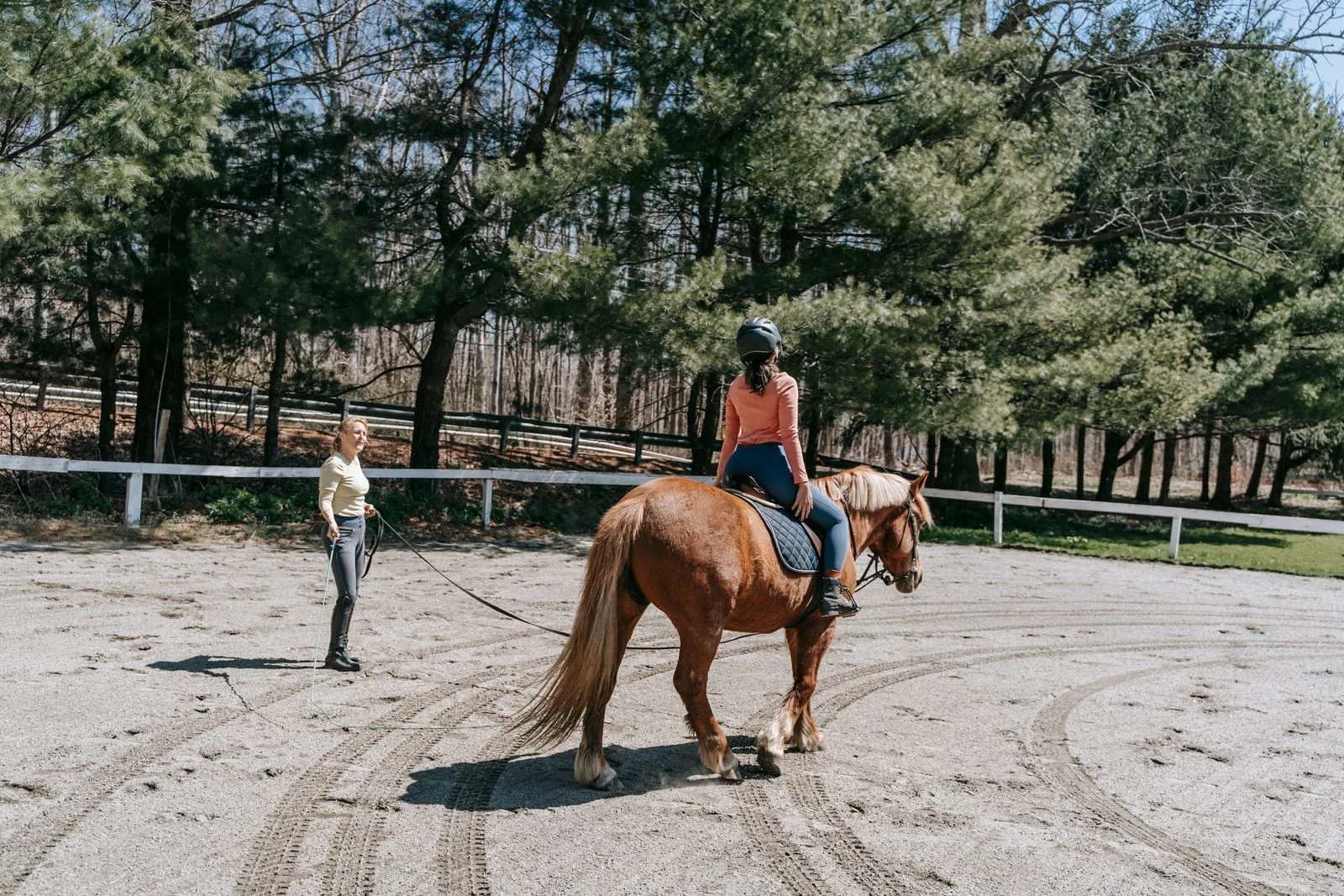
- A private first lesson or two — one-to-one attention early on builds confidence quickly and safely.
Managing the nerves
Feeling apprehensive is normal and nothing to be embarrassed about — tell your instructor. Start at walk until you feel secure, breathe, and resist comparing yourself to others. Regular weekly lessons beat occasional intensive ones because confidence, like fitness, is built steadily. Within a term most adults are rising to the trot; a confident canter usually follows within a few months.
Finding the right school as an adult
Not every yard is equally suited to nervous grown-ups, so it's worth a little homework before you book. Look for a BHS-approved or ABRS-registered school — approval means qualified instructors, well-cared-for horses and proper insurance. Phone ahead and simply say you're an adult beginner who's a little nervous; how they respond tells you a lot. The best schools will reassure you, ask about your height and build so they can match you to a suitable horse, and offer a private or semi-private first lesson rather than throwing you straight into a busy group. Some yards run dedicated adult beginner classes, which many people find far less intimidating than sharing an arena with confident pony-club children. A calm, tidy yard with contented-looking horses and instructors who remember your name is worth travelling a few extra miles for.
Getting your body ready
Riding uses muscles you didn't know you had — deep core, inner thigh, calf and back — so a little off-horse preparation pays dividends. You don't need to be sporty, but general fitness makes learning easier and reduces the stiffness after early lessons. Gentle work on core stability (Pilates is a favourite among riders), hip and hamstring flexibility and overall stamina all help. If you carry any injuries or a bad back, mention it to your instructor so they can adapt. And expect to ache after your first few sessions; it settles quickly and is a sign you're using the right muscles.
What to expect in your first months
Adults sometimes worry that they'll be the only grown-up flailing about among confident children, but that's rarely the case, and progress follows a reassuring pattern:
- Lessons 1–4: getting comfortable at walk, learning to steer, stop and sit tall.
- Weeks 4–10: rising trot, turns and circles, riding independently off the lead.
- Months 3–6: your first canter, plus simple pole work and school figures.
- Beyond: hacking out, perhaps a BHS award, and the confidence to ride different horses.
The single biggest predictor of how fast you improve isn't age or athleticism — it's how regularly you ride. A weekly lesson, kept up faithfully, will take you further than a burst of enthusiasm followed by a month off.
Riding with common adult worries
Several concerns come up again and again, and none of them need stop you. "I'm not fit or slim enough" — reputable schools have horses suited to a wide range of riders and will happily advise on weight limits without embarrassment. "I'm frightened of falling" — at beginner level, in an enclosed school on a sensible horse, serious falls are uncommon, and a body protector adds reassurance once you start rising trot and canter. "I've no time" — a single weekly hour is genuinely enough to progress. "I'll look silly" — every good rider was once a wobbling beginner, and instructors have seen it all a thousand times over. Name your worry, and a good teacher will help you ride around it.
A word on falling off
Every rider comes off eventually — it's a normal part of learning, not a disaster — and dreading it does more harm than the thing itself. At beginner level, in an enclosed school on a sensible horse, tumbles are infrequent and usually undramatic: a slither from a spook or a lost balance in trot. Wearing a correctly fitted hat every ride, and a body protector once you start trotting and cantering, stacks the odds firmly in your favour. If you do part company, the instinct is to leap up embarrassed; instead, take a moment, check yourself over, and get back on when you're ready — confidence is preserved by treating it matter-of-factly. Instructors are trained in exactly this and will talk you calmly through it.
The rewards beyond the riding
Adult learners often say the surprise is how much riding gives back off the horse as well as on it. It's an hour of complete mental absorption — you simply can't ruminate on work while asking a half-tonne animal to bend around your leg — and that makes it a wonderful antidote to a stressful week. It gets you outdoors and moving, introduces you to a friendly, welcoming community, and gives you a genuine sense of achievement each time something clicks. Many riders describe their weekly lesson as the highlight of their week, and take it up in their forties, fifties or beyond with no regrets other than not starting sooner.
When you're ready for the next gear, see how to canter for beginners, and get the practical basics sorted with what to wear and lesson costs.