How to Start Horse Riding as a Beginner in the UK
Start at a BHS-approved riding school, book a private or small-group beginner lesson (usually £35–£55 for 30–60 minutes), wear a hard hat with a heel-boot, and go regularly. Don't buy a horse — or much kit — until you've had a term of lessons.
Almost everyone who rides well started out nervous, wobbly and gripping the reins far too tightly. The good news is that learning to ride in Britain has never been easier or better organised. You don't need your own horse, expensive kit or any prior experience — just a decent local riding school and the willingness to turn up regularly.
Find a good riding school first
Your single most important decision is where you learn. Look for a school approved by the British Horse Society (BHS) or the Association of British Riding Schools — approval means the horses are well cared for, the instructors are qualified and the insurance is in order. A tatty, overcrowded yard with bored ponies is where bad habits and accidents begin.
- A BHS-approved riding school near you — the gold standard; approval covers welfare, safety and instructor qualifications.
- A quiet, well-run local yard — fewer horses, calmer atmosphere and instructors who remember your name.
- A trekking or holiday centre for a taster — a gentle way to test whether you enjoy it before committing to lessons.
Your first few lessons
Book a beginner lesson — ideally private or in a very small group — and expect to spend the first sessions learning to mount, sit, steer and stop at walk and trot. Progress feels slow at first; that's normal. Ride weekly if you can, because muscle memory fades fast with long gaps. Most people feel genuinely competent at rising trot within a term.
Private lessons or group lessons?
Most schools offer both, and each has its place. A private lesson (typically £40–£60 for 30–45 minutes) gives you the instructor's full attention, which is invaluable in the nervous early stages — you can go at your own pace and ask endless questions without holding anyone up. A group lesson (usually £30–£45 for 45–60 minutes) is cheaper, more sociable and teaches you to control your horse around others, which is a genuine skill in itself. The sensible pattern is a handful of private lessons to find your feet, then a move into small groups once you can walk, steer and rise to the trot with some confidence.
What actually happens in your first lesson
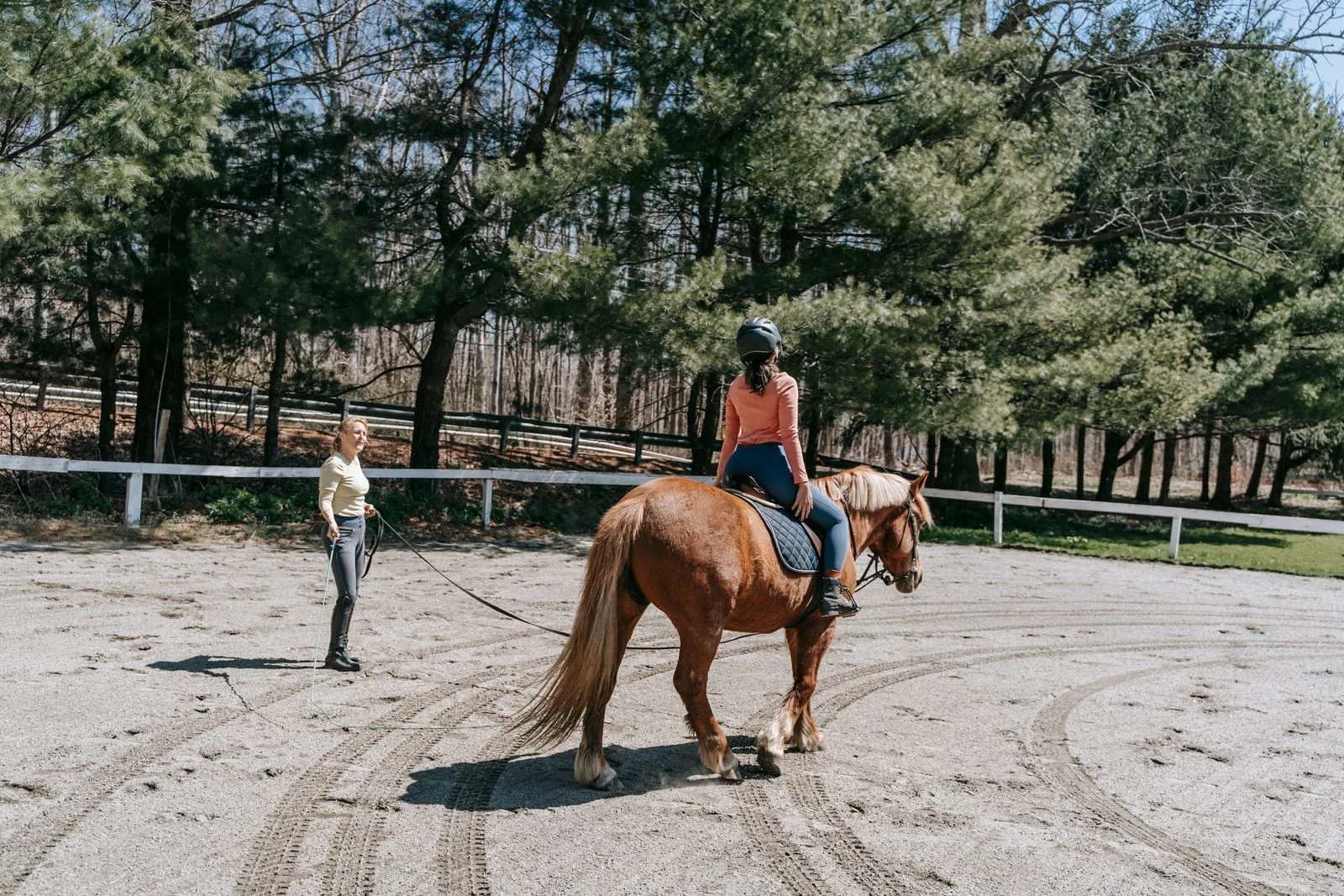
Knowing the shape of the session takes a lot of the fear out of it. You will usually be met at the yard, introduced to your horse and shown how to lead it to the mounting block. An instructor or helper will check your hat and adjust your stirrups, then hold the horse while you mount. The lesson itself is normally on a lunge line or in an enclosed manège (the fenced sand school), so the horse can't wander off. You'll spend time simply sitting correctly, learning to hold the reins, and practising walk, halt and steering before a first, brief attempt at trot. Expect to feel unbalanced and to use muscles you had forgotten about — that is entirely normal and improves quickly.
How riders progress in Britain
There is a well-trodden path from wobbly beginner to confident rider. Broadly, most people move through these stages over their first year or two of regular lessons:
- Weeks 1–6: mounting, position, walk, steering, halt and the beginnings of rising trot.
- Months 2–4: a balanced rising trot, turns and circles, and starting to ride without being led.
- Months 4–9: sitting trot, your first canter, and simple school movements.
- Beyond: hacking out on quiet lanes, pole work, and — if it appeals — the British Horse Society's graded exams and awards.
If you want a recognised structure, the BHS Ride and Challenge Awards and the older Stages system give you clear goals and a qualification many schools teach towards. They are entirely optional, but they help you measure progress beyond "I feel a bit better than last week".
What it costs to get started
One of the reasons riding feels daunting is a fear of the cost, but starting out is more affordable than most people imagine because the school supplies the horse and the hat. A realistic first-term budget looks like this:
- Lessons: £35–£55 each; a weekly group lesson is roughly £150–£220 a month.
- Hat: borrow the school's at first, then budget £45–£90 for your own once you commit.
- Basic kit: jodhpurs or riding tights (£25–£45) and jodhpur boots (£30–£55) — but only once you're sure.
- Gloves: a useful £8–£15 extra that saves blistered palms.
In short, you can have several lessons for the price of a single item of specialist kit, which is exactly why we tell beginners to ride first and shop later.
How often should you ride?
Regularity beats intensity every time. A single lesson a week keeps your muscle memory ticking over and lets each session build on the last; leave a month between lessons and you spend the first ten minutes of each one re-learning what you had. If budget is tight, a fortnightly lesson still works — just expect slower progress. Some schools offer cheaper off-peak weekday slots, and many run intensive courses or "own-a-pony" days in the school holidays that pack in a lot of saddle time for the money.
Staying safe and building confidence
Nerves are the beginner's biggest hurdle, not talent. Tell the school honestly that you're anxious and they will pair you with a calm, been-there-done-that horse — a good "schoolmaster" is worth its weight in gold. Wear your hat correctly on every ride, keep your heels down and your thumbs on top, and never feel embarrassed to ask to go back to walk. Falls are far rarer than people fear at this level, and confidence grows fastest when you feel in control rather than pushed. Ride the horse you're given without ego, listen to your instructor, and progress looks after itself.
For the practical details, see what to wear for your first lesson and how much lessons cost. Learning as a grown-up? Our guide to riding as an adult is written for you, and parents should read riding for kids.